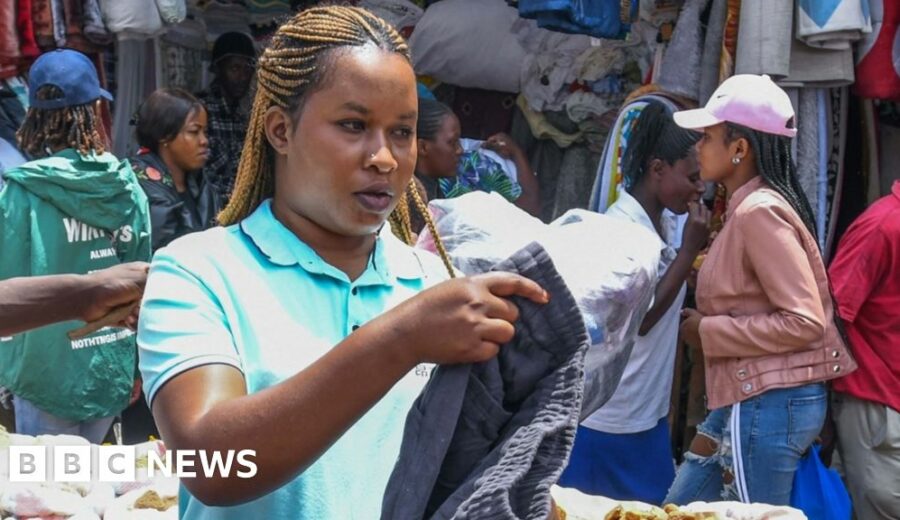
Uganda has introduced a 30% tax on used clothing imports to boost its local garment industry and protect the environment, sparking a debate across East Africa on the impact of second-hand clothes on the region’s economy.
The East African Community, a regional bloc that includes Kenya and Tanzania, has long struggled with the influx of cheap used clothing from the US, Europe, and China, which has hindered the growth of a thriving fashion industry. Kenyan designer Zia Bett says, “We’re competing with second-hand clothing, but we can’t compete on price.”
Used Clothing Imports
Kenya is the largest importer of second-hand clothing in Africa, with almost 180,000 tonnes of used clothing imported in 2022, a 76% increase from 2013. The used clothing trade supports up to 4.9 million people across East Africa, but critics argue that these jobs are limited and do not contribute significantly to the economy.
Dr. Andrew Brooks, a King’s College London academic, says, “Retail is the most limited form of job creation you can have in an economic sector, versus production, marketing, and distribution.” However, some argue that used clothing provides an important service, making decent clothing affordable for the poorest people.
Regional Implications
The debate over used clothing imports has significant implications for the region’s economy and environment. The new tax in Uganda aims to mitigate environmental degradation and promote domestic production, but traders argue that it will lead to price increases and hurt their businesses.
The issue highlights the challenges faced by East African countries in balancing economic growth, environmental protection, and social welfare. As the region continues to grapple with the impact of used clothing imports, it must find a solution that supports local industries, protects the environment, and benefits its people.