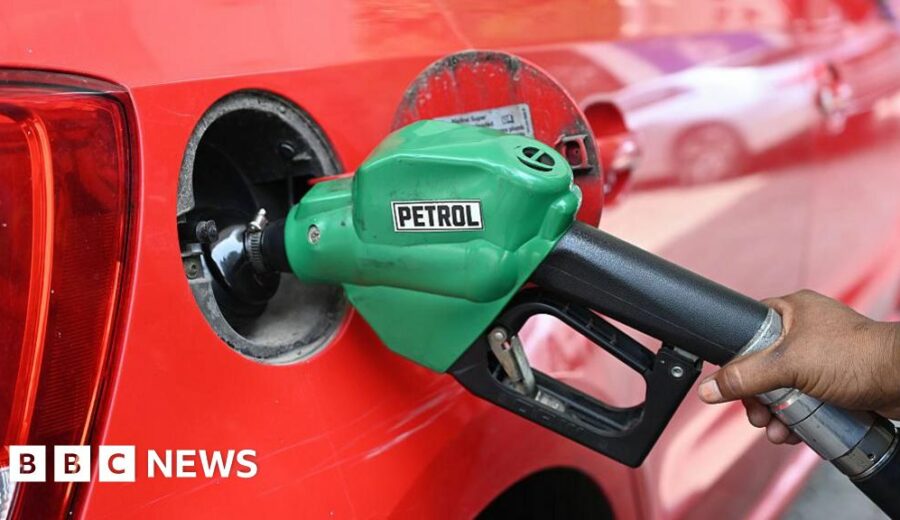
Oil prices have plummeted, with global benchmark Brent crude falling 5.5% to $97.90 a barrel, as hopes rise for a peace deal between the US and Iran. The potential agreement could bring an end to the conflict that has disrupted oil supplies and driven up prices. US Secretary of State Marco Rubio stated that negotiators have a “pretty solid thing on the table” and an agreement might be reached soon.
The US and Iran have been engaged in talks since a ceasefire was agreed in early April, and a long-term peace deal could have significant implications for global oil markets. US President Donald Trump said the negotiations are “proceeding nicely” but added that it would either be “a great deal for all or no deal at all”. Iran’s foreign ministry spokesman, Esmail Baqai, noted that progress has been made, but a deal is “not imminent”.
US-Iran Peace Deal
The potential peace deal could lead to the reopening of the key Strait of Hormuz shipping route, which has been effectively closed since the conflict started. The strait is a critical passage for oil and liquefied natural gas (LNG) shipments, with around a fifth of the world’s oil and LNG usually passing through it. The conflict has driven up oil prices, with Brent crude rising from around $70 a barrel before the war to over $100 a barrel at its peak.
Energy experts say that even if a deal is reached, oil markets will remain tight through 2027 due to the time required to normalize oil flows through the Strait and repair damaged oil facilities. Saul Kavonic, head of energy research at MST Financial, noted that there is now some light at the end of the tunnel, which will bring some near-term oil price relief. However, Lars Jensen, chief executive of Vespucci Maritime, warned that the shipping industry will remain cautious and hesitant, even if a deal is announced.
Global Implications
The potential peace deal has significant implications for global energy markets and the economy. Japan’s Nikkei 225 stock index rose above 65,000 for the first time, gaining 3% on hopes that the strait would soon reopen. The conflict has particularly affected Japan and South Korea, which are heavily reliant on energy from the Gulf. The reopening of the Strait of Hormuz could lead to a decrease in oil prices, which would have a positive impact on the global economy.
The situation is being closely watched by investors and consumers, who are waiting to see if a deal will be reached and what the implications will be for the global economy. As the situation continues to unfold, one thing is clear: a peace deal between the US and Iran would have significant and far-reaching consequences for global oil markets and the economy, and could potentially lead to a more stable and secure energy supply.