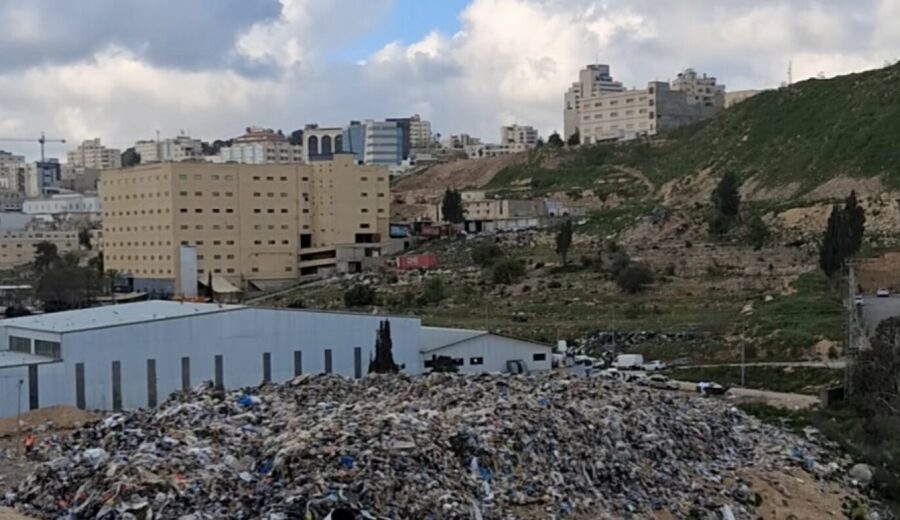
Garbage is piling up in the West Bank as Israeli restrictions on movement have crippled the region’s waste management system, leaving 3.4 million Palestinians to live among uncollected trash. The crisis has worsened since October 2023, when Israel tightened its grip on the territory in response to a Hamas-led attack.
The restrictions have made it difficult for garbage trucks to navigate the West Bank, with over 925 checkpoints and roadblocks hindering their movement. As a result, trash is being dumped illegally, and transfer stations are overflowing with waste. In Ramallah, a transfer station has become a de facto landfill, with an estimated 750 tons of garbage accumulating.
In response to the crisis, two young entrepreneurs, Ibrahim Ghazal and Faris Abu Keshek, have started a recycling operation called Scrapcycle Solutions. The company sorts, washes, and melts plastic waste, producing recycled pellets that can be used again. The startup is a beacon of hope in a region struggling to cope with the trash crisis.
The West Bank’s recycling efforts are hindered by the lack of infrastructure, including only two landfills, which are nearing capacity. The Palestinian Authority has appealed for a third landfill, but Israel has refused, citing security concerns. The Israeli military claims it is working on a construction permit for a new landfill, but the process has been slow.
The trash crisis has significant implications for the health and well-being of Palestinians living in the West Bank. The accumulation of waste has led to the spread of diseases and the proliferation of pests. The crisis has also highlighted the need for sustainable waste management practices in the region.
The international community has called on Israel to ease its restrictions on movement and allow for the free flow of goods and services, including waste management. The crisis has sparked concerns about the humanitarian situation in the West Bank and the need for a lasting solution to the conflict.