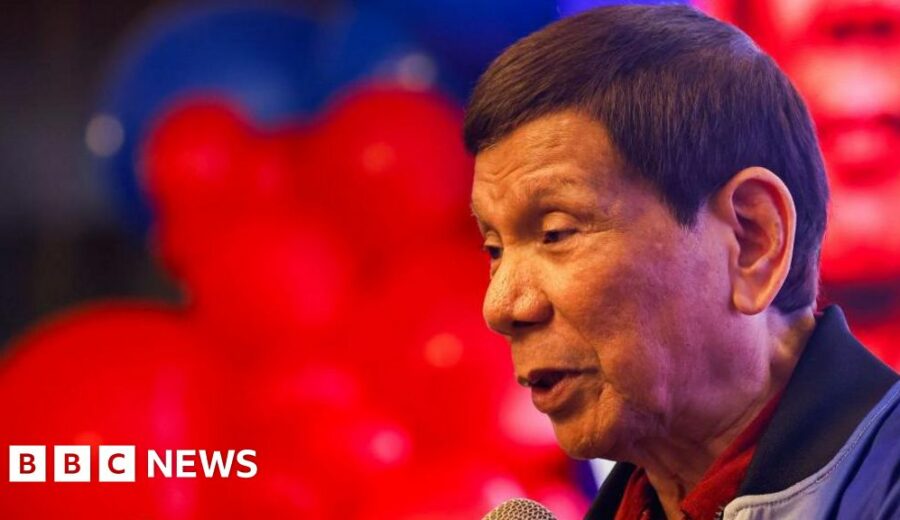
Former Philippine President Rodrigo Duterte’s trial for alleged crimes against humanity is set to begin on November 30 at the International Criminal Court in The Hague. The 81-year-old is the first Asian former head of state to be indicted by the ICC, facing charges including murder, torture, and rape related to his “war on drugs” campaign.
Duterte, who led the Philippines from 2016 to 2022, has been detained at The Hague since his arrest at Manila airport on March 11, 2025. The ICC charges stem from his time as mayor of Davao and as president, during which tens of thousands of people were killed in extrajudicial killings, according to human rights groups.
Crimes Against Humanity Trial
The trial will focus on three counts of crimes against humanity, including murder, torture, and rape, allegedly committed between November 1, 2011, and March 16, 2019. Prosecutors allege Duterte was involved in at least 76 murders during this period, which included his time as mayor of Davao and his presidency.
Duterte has maintained his innocence, with his lawyer saying he does not recognize the ICC’s authority. However, ICC prosecutor Julian Nicholls has stated that Duterte’s actions amount to “decades of murdering his own people” and that he does not deny the allegations.
Duterte’s “war on drugs” campaign sparked international condemnation, with critics arguing that it targeted small-time drug dealers and users, while failing to address the root causes of the drug problem. Human rights groups estimate that up to 30,000 people may have been killed during the campaign.
Reactions and Implications
The trial has significant implications for the Philippines and the international community, with many seeing it as a test of accountability for leaders accused of human rights abuses. Duterte’s family has condemned the trial, with his son Sebastian calling it “selective prosecution dressed up as moral superiority.”
The trial is also seen as a crucial moment for the families of victims of the “war on drugs” campaign, who have been seeking justice for years. As the trial approaches, many are watching to see how the ICC will handle the case and what impact it will have on the Philippines and the wider region.
The outcome of the trial will have broader significance, as it will set a precedent for how international courts handle cases of alleged human rights abuses by leaders, and will serve as a reminder that those in power can be held accountable for their actions.


