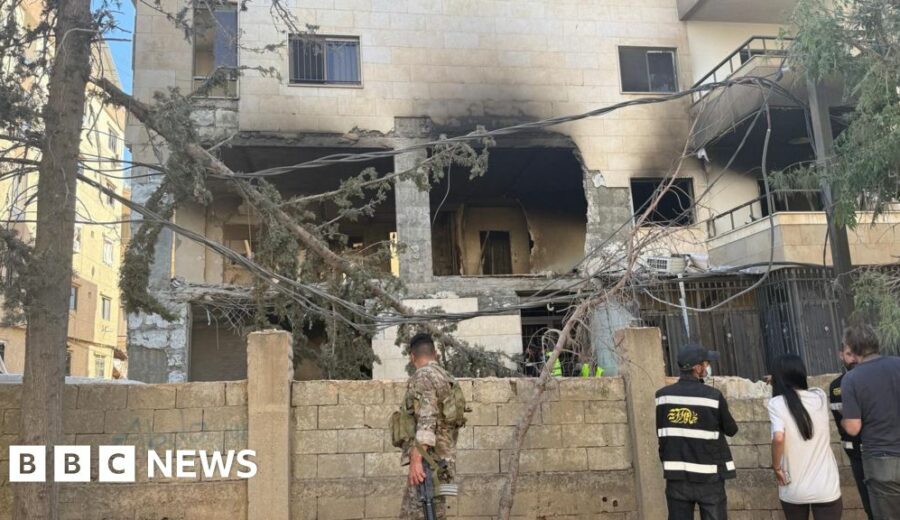
Israel launched a targeted strike on the Lebanese capital of Beirut, killing at least one person and injuring several others. The attack, which occurred at approximately 11:00 GMT, hit a densely populated Shia suburb, causing widespread damage and panic among residents.
The Israel Defense Forces (IDF) confirmed the strike, but did not provide details on the target. However, Israeli media reports suggest that the target was Ali al-Husni, the head of an Iranian militia allied to Hezbollah. The strike is the second to hit Beirut since a ceasefire was implemented last month.
Lebanon Conflict Escalation
The conflict between Israel and Hezbollah has been escalating in recent days, with both sides accusing each other of violating the ceasefire. The IDF has carried out several strikes against Hezbollah infrastructure in southern Lebanon, while Hezbollah has launched drone attacks on Israeli troops and civilians.
The latest strike came after Israeli Prime Minister Benjamin Netanyahu announced an expansion of a ground operation in southern Lebanon. The IDF has warned residents to move north of the Zahrani River, citing the risk of “extreme force” in the area. At least 11 people were killed in two sets of Israeli strikes that hit Tyre and an area to the city’s east on Thursday.
Residents in the affected areas are struggling to cope with the violence, with many forced to flee their homes and seek shelter elsewhere. Humanitarian workers and city officials are working to provide aid, but the situation remains dire. The conflict has also raised concerns about the potential for a broader regional war, with the US and Iran on opposite sides of the conflict.
Regional Implications
The escalation of the conflict in Lebanon has significant implications for the region, with the potential to draw in other countries and spark a wider war. The US has been working to broker a peace deal between Israel and Lebanon, but the latest violence has raised doubts about the prospects for a lasting ceasefire.
The conflict has also highlighted the deep divisions between Israel and Hezbollah, with both sides dug in and refusing to back down. As the violence continues to escalate, the risk of a broader regional conflict grows, with potentially devastating consequences for the people of Lebanon and the wider region.
The situation remains volatile, with the potential for further violence and escalation in the coming days. As the international community works to broker a peace deal, the people of Lebanon remain caught in the crossfire, struggling to survive and rebuild their lives amidst the chaos and destruction.