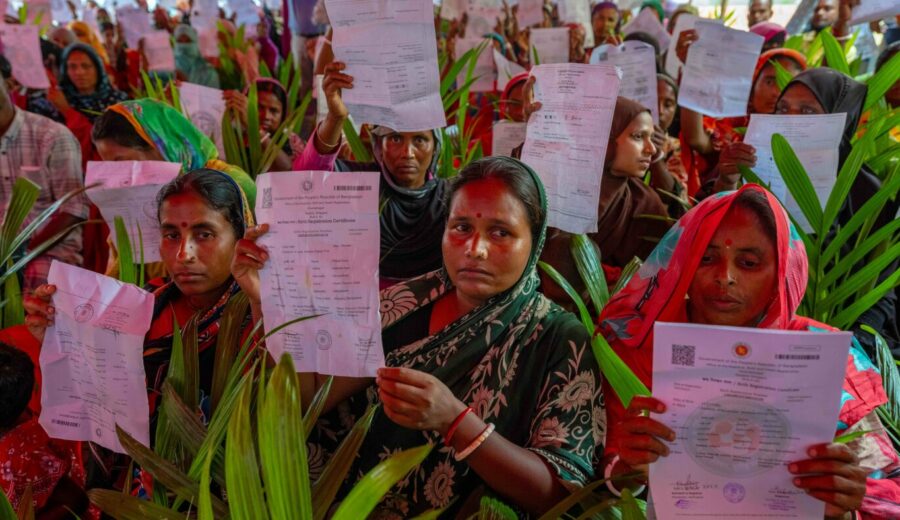
Nearly half of all deaths and 25% of all births worldwide go unrecorded every year, leaving millions without a legal identity or access to vital services. This staggering statistic is highlighted in “The Uncounted,” a photography project by Juan Arredondo that explores the importance of life cycle records in six countries. The project’s findings are now on display at the Photoville exhibition in Brooklyn, New York.
In Bangladesh, mothers are holding up newly obtained birth certificates after a government registration drive, enabling them to enroll in a food assistance program. Similarly, in Rwanda, officials are working to digitize paper archives, making it easier for people to access their records. The lack of documentation has severe consequences, including limited access to healthcare and social services.
Uncounted Lives
The absence of birth and death certificates means that people are invisible to the health system, making it difficult to track and prevent diseases. In Zambia, for example, the lack of data on childhood mortality led to a significant number of untreated HIV cases. However, after analyzing the data, the government changed its policy, resulting in a significant increase in testing and treatment for at-risk children.
The project’s findings emphasize the importance of documentation in public health. Jennifer Ellis, who leads the Bloomberg Philanthropies Data for Health Initiative, notes that understanding the data on deaths and births is crucial in establishing priorities for healthcare systems. The lack of documentation not only affects individuals but also hinders governments’ ability to identify and respond to health threats.
In the Philippines, nurses are working to register births, while in Rwanda, verbal autopsy officers are collecting data on deaths to improve record-keeping. These efforts demonstrate the challenges and importance of documenting life cycle events.
Global Implications
The issue of unrecorded lives is not limited to developing countries; it has far-reaching implications for global health and development. The lack of data on births and deaths hinders efforts to track progress towards global health goals, such as reducing child mortality and improving access to healthcare.
The project’s findings serve as a reminder of the importance of investing in civil registration systems and ensuring that all individuals have access to vital documents. By doing so, governments can better understand their populations’ needs and develop targeted interventions to improve health outcomes.
The issue of unrecorded lives is a pressing global concern, with millions of people living without a legal identity or access to essential services. As the world continues to grapple with health crises and development challenges, the importance of documentation and data cannot be overstated, and it is crucial that governments and international organizations prioritize this issue to ensure that all individuals have access to the services and protections they deserve.