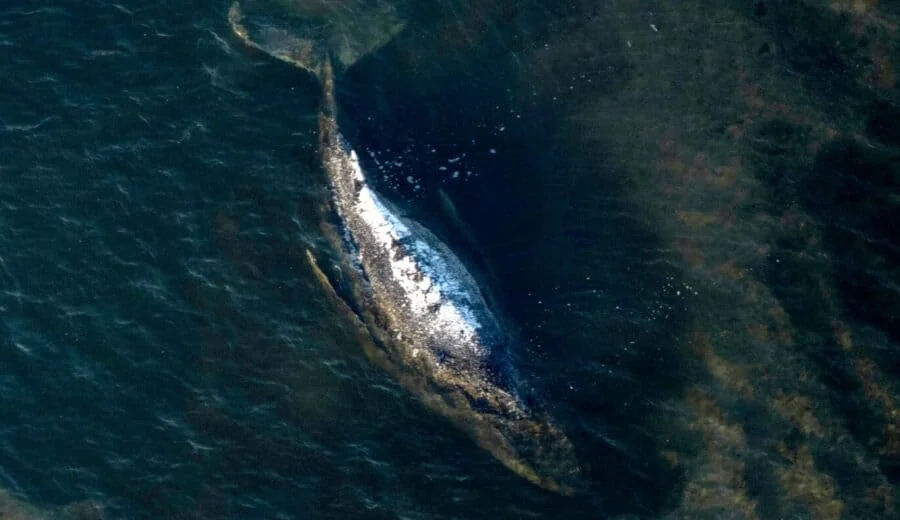
A humpback whale’s carcass was pulled onto a Danish beach Saturday, ending a months-long saga that captivated Germany and sparked a massive rescue effort. The whale, nicknamed “Timmy” and “Hope,” was found dead on May 14 in shallow waters off the island of Anholt, between Denmark and Sweden. Its death marked the end of a spectacular and contentious rescue attempt that involved transporting the mammal toward the North Sea in a barge.
The whale’s journey began on March 3, when it was first spotted off the German coast, and since then, it has been the subject of intense media coverage, with live blogs and push alerts updating its status. The Danish Environmental Protection Agency will examine the carcass next week to determine the cause of death. Experts speculate that the whale may have lost its way while swimming after a shoal of herring or during migration, leading it into the Baltic Sea, far from its natural habitat.
Humpback Whale Rescue
The rescue effort was a complex and challenging operation, with the whale being transported in a barge in a final attempt to guide it back to the Atlantic Ocean. Despite these efforts, the whale was found dead, and its carcass was left in shallow waters for two weeks before being brought to shore. The Danish news outlet “News5” livestreamed the carcass being dragged onto the shoreline by a cable attached to a truck on the beach.
The whale’s story has sparked widespread interest and concern, with many following its journey and mourning its loss. The incident highlights the importance of understanding and protecting marine life, particularly in areas where they may become stranded or lost.
Environmental Implications
The whale’s death serves as a reminder of the challenges faced by marine animals in navigating changing environments and habitats. As the world grapples with the impact of human activity on the ocean and its inhabitants, incidents like this underscore the need for continued research and conservation efforts. The examination of the carcass will provide valuable insights into the cause of death and may inform future rescue and conservation efforts.
The story of the humpback whale, though tragic, has raised awareness about the importance of protecting marine life and the need for continued conservation efforts, giving a glimpse into the complex and often fragile relationship between humans and the ocean.