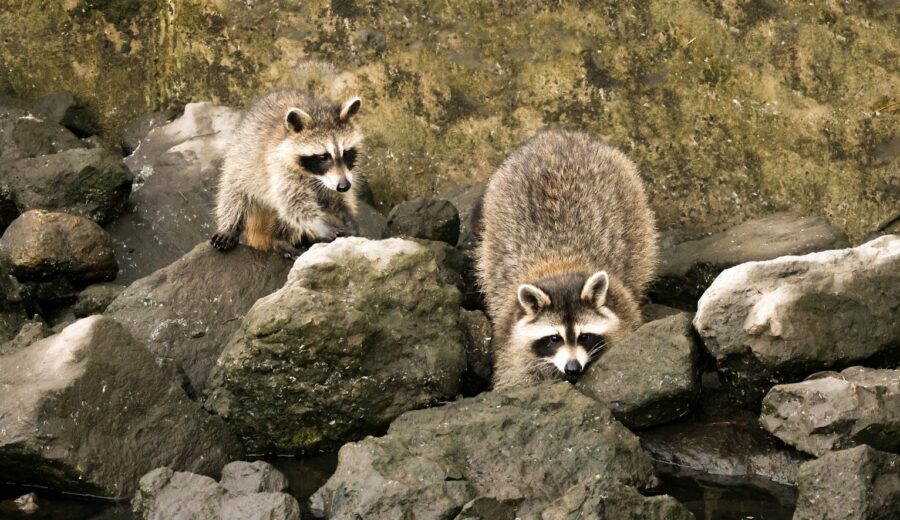
A raccoon named Jimothy has become an overnight sensation on the internet, with over 8 million views on a video of him bounding across streets in Washington. The Seattle raccoon, nicknamed for his unusual, spindly shape, has been seized on by social media users and brands alike, with many praising his unique appearance and others using him to raise awareness about spine conditions.
Jimothy’s rise to fame began with a video shared by Seattle resident Kiana Hall on Instagram, which showed the raccoon hurtling across a pavement and up some nearby steps. The video quickly went viral, with many users sharing and reposting it, and even inspired a mural in the neighborhood of Ballard, where he was first spotted.
Raccoon Jimothy’s Viral Fame
Jimothy’s unusual appearance, which some have attributed to short spine syndrome, has made him an instant hit on social media, with many users sharing memes and jokes about him. However, some have also praised his online fame for drawing attention to spine conditions, with one user writing that she hoped someone could care for Jimothy as a wild animal.
According to digital culture researcher Dr. Idil Galip, Jimothy’s viral fame is part of a larger trend of humans and animals crossing paths more often, resulting in more footage of animals being funny and shareable. This has led to a surge in online attention for animals like Jimothy, with many brands and individuals jumping on the trend to capitalize on consumer interest.
Jimothy’s online fame has also translated into the real world, with a local artist creating a mural of him in Ballard and even President Donald Trump’s White House social media accounts sharing a meme of the raccoon. However, this surge in attention has also raised concerns about the impact on Jimothy’s safety and well-being, with local officials urging people to respect his privacy.
Impact and Implications
Jimothy’s viral fame has significant implications for our understanding of online culture and the impact of social media on our relationships with animals. As Dr. Galip notes, “meme marketing is now standard practice for many brands,” and Jimothy’s rise to fame is just one example of how brands are using viral moments to capitalize on consumer interest.
However, this trend also raises important questions about the ethics of using animals for entertainment and marketing purposes. As we continue to share and repost videos of animals like Jimothy, we must also consider the potential impact on their safety and well-being, and strive to promote responsible and respectful interactions with wildlife.
The broader significance of Jimothy’s viral fame lies in its reflection of our collective fascination with animals and the natural world, and the ways in which social media is changing the way we interact with and understand the world around us.