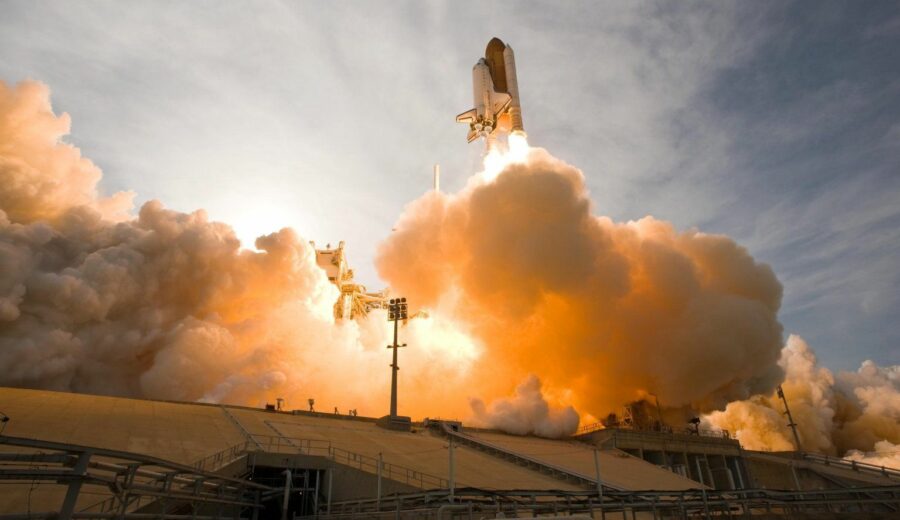
SpaceX’s Super Heavy-Starship rocket blasted off on its 13th test flight Friday, with the giant booster experiencing engine issues that led to a “hard” splashdown off the Texas Gulf Coast.
The rocket, powered by 33 methane-fueled Raptor engines, launched from SpaceX’s Starbase in Texas at 5:51 p.m. ET, putting on a spectacular show for area residents and tourists as it climbed away with 16 million pounds of thrust.
Super Heavy-Starship Test Flight
The Starship upper stage carried out a successful suborbital hop to the Indian Ocean, deploying 20 third-generation Starlink internet satellites in a real-world test of the rocket’s payload dispenser.
The Starship briefly reignited one of the Raptor engines to demonstrate its ability to restart in space, which will be required for future flights to the moon.
The spacecraft then faced a belly-first reentry before flipping upright and settling to a dramatic rocket-powered splashdown northwest of Australia 1 hour and 5 minutes after launch.
Implications and Next Steps
Despite engine issues, the Starship’s performance was welcome news to NASA, which is counting on a variant of the upper stage to serve as a lunar lander for astronauts in the agency’s Artemis program.
SpaceX must ramp up its Super Heavy-Starship test schedule to get the vehicle certified for human spaceflight and to demonstrate the reliability required to safely launch more than a dozen tankers within days of the lander’s launch, with the first such landing targeted for 2028.
The success of the Super Heavy-Starship program has significant implications for the future of space exploration, as it could enable NASA to return humans to the moon and eventually send crewed missions to Mars, marking a major milestone in the pursuit of space travel and discovery.