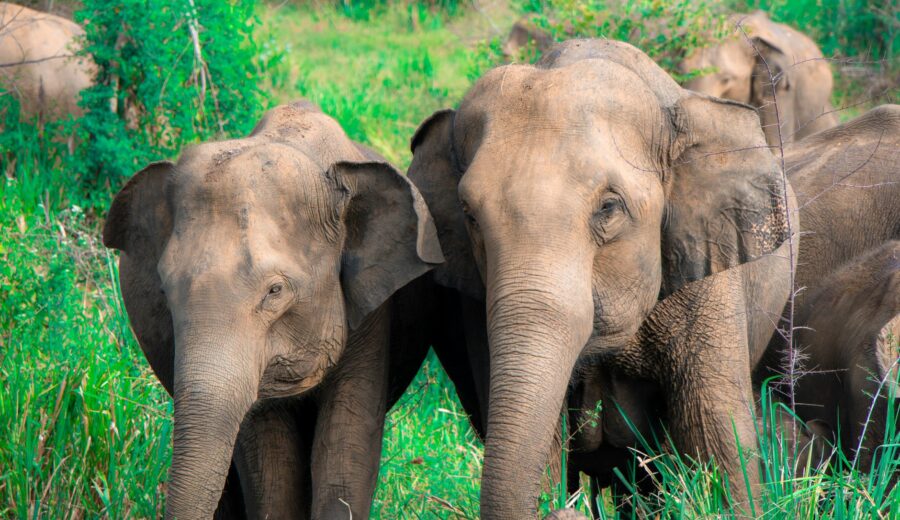
Hundreds of people and elephants have been killed in recent years due to conflicts over habitat in central Sri Lanka. Farmers, preparing for the spring rice sowing season, face significant losses as elephants trample their crops, leading to desperate attempts to scare them off with firecrackers and lit torches.
The situation has become dire, with Sri Lanka’s 7,400 elephants living freely across the island, often encroaching on areas converted to intensive agriculture. This has resulted in a significant human-elephant conflict, affecting both the local population and the elephant population.
Elephant Conservation Efforts
In an effort to mitigate this conflict, some areas like the Hurulu Eco Park in Sri Lanka’s Habarana district have been established as a haven for elephants. The park provides a safe space for the animals to graze freely, showcasing the beauty and majesty of these creatures.
Visiting the park offers a glimpse into the lives of these elephants, highlighting the need for conservation efforts to protect both humans and animals. The conflict between elephants and farmers serves as a reminder of the delicate balance between human development and wildlife preservation.
Human-Elephant Conflict Implications
The human-elephant conflict in Sri Lanka has significant implications for the local community and the environment. As the conflict continues to escalate, it is essential to develop effective strategies to address the issue, ensuring the safety of both humans and elephants.
The situation in Sri Lanka serves as a reminder of the importance of conservation efforts and the need to find a balance between human development and wildlife preservation, ultimately highlighting the broader significance of protecting endangered species and their habitats.


