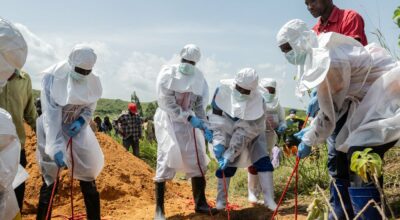
The World Health Organization has declared the Ebola outbreak in Congo and Uganda a public health emergency of international concern, with over 250 suspected cases and 80 suspected deaths reported. The outbreak has been identified in Congo’s eastern province of Ituri and has also spread to Uganda, with two laboratory-confirmed cases reported in the capital city of Kampala. Health officials warn that the true scope of the outbreak could be much larger than reported.
The WHO has identified eight laboratory-confirmed cases, 246 suspected cases, and 80 suspected deaths in Congo, while Uganda has reported two laboratory-confirmed cases, including one death. The outbreak is caused by the Bundibugyo virus, a variant of the disease that has been less prominent in Congo’s past outbreaks. This is Congo’s 17th outbreak since Ebola first emerged in the country in 1976.
Global Health Emergency
The WHO’s emergency declaration is a call to action for the international community to provide support to Congo and Uganda to contain the outbreak. The organization has advised against closing international borders, but has warned that the outbreak has the potential to spread to other countries in the region. The Africa Centres for Disease Control and Prevention has reported 246 suspected cases and 65 deaths in Congo, while regional health officials have identified upwards of 300 probable cases overall.
Locals in Ituri’s capital, Bunia, are afraid for their lives amid frequent burials, with one resident saying that “every day, people are dying … and this has been going on for about a week.” Congolese Health Minister Samuel-Roger Kamba has confirmed that there have been eight laboratory-confirmed cases, and among them, four deaths. The suspected index case in the latest outbreak is a nurse who died at a hospital in Bunia, with the case dating back to April 24.
Medical aid group Doctors Without Borders has said it is preparing a “large-scale response” to the outbreak, calling the rapid spread “extremely concerning.” Kenya, Uganda’s neighbor, has said there is only a “moderate risk of importation” of the Ebola virus due to regional travel, but has formed an Ebola preparedness team and strengthened surveillance at all points of entry.
International Response
The WHO’s declaration of a public health emergency of international concern is a significant step in responding to the outbreak. The international community is being called upon to provide support to Congo and Uganda to contain the outbreak and prevent further spread. Health experts are warning that the outbreak has the potential to spread to other countries in the region, and that a rapid and coordinated response is needed to prevent this.
The outbreak is a reminder of the ongoing threat posed by Ebola, and the need for continued investment in global health security. As the international community responds to the outbreak, it is clear that the fight against Ebola is far from over, and that continued vigilance and cooperation are needed to prevent the spread of this deadly disease.