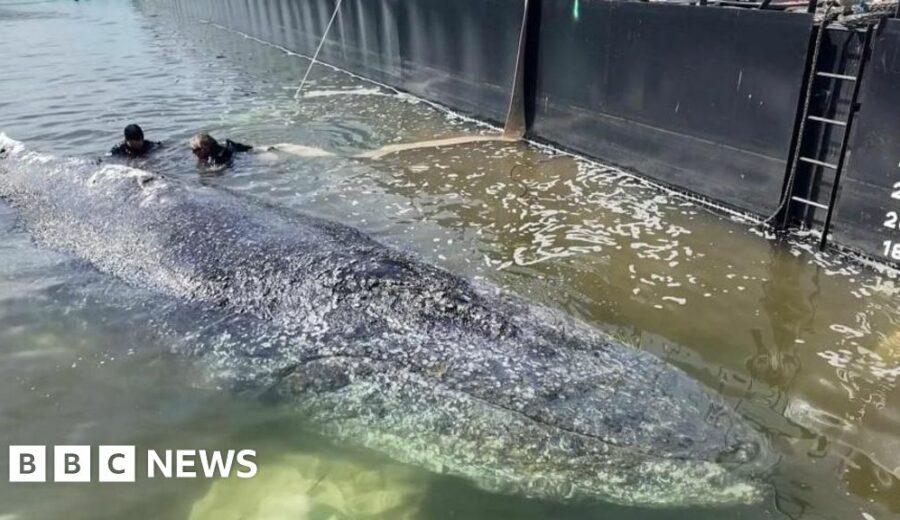
A dead humpback whale is set to be removed from a Danish island after a failed rescue attempt, prompting concerns over potential health risks to locals. The whale’s carcass was found on the island of Anholt, where it had washed up after being released into the North Sea. Danish environment officials are now planning to remove the carcass, which is around 20-30 meters from the beach.
The whale’s story began weeks ago, when it became stranded along Germany’s Baltic Sea coast. A private rescue bid was launched, but German experts warned that the whale was weak and at risk of drowning. Despite efforts to save it, the whale was eventually released into the North Sea, where it apparently swam to the Danish island of Anholt.
Whale Removal Efforts
Danish officials have urged islanders to keep away from the carcass due to the risk of infection. The environmental protection agency will conduct a post-mortem examination on the whale, which will also provide valuable scientific samples for research purposes. The agency is working on a solution to remove the whale, but has not yet detailed when or how this will happen.
Islanders are worried that the whale’s carcass may explode due to a buildup of gas as it decomposes. However, some residents are taking a more philosophical view, with one woman saying “that’s nature” and expressing no concern. The whale’s story has gained significant attention in Germany, with some media outlets nicknaming it “Timmy” or “Hope”.
Broader Implications
The removal of the whale’s carcass is not just a local issue, but also has implications for marine conservation efforts. The incident highlights the challenges of rescuing stranded whales and the importance of protecting these animals and their habitats. As the world grapples with the impact of human activity on marine ecosystems, the story of this humpback whale serves as a reminder of the need for continued conservation efforts.
The whale’s journey from Germany to Denmark has also raised questions about the effectiveness of international cooperation on marine conservation issues. As the removal of the whale’s carcass gets underway, officials and residents alike will be watching to see what lessons can be learned from this experience. The fate of this humpback whale may be a sad one, but it can also serve as a catalyst for greater awareness and action on marine conservation.