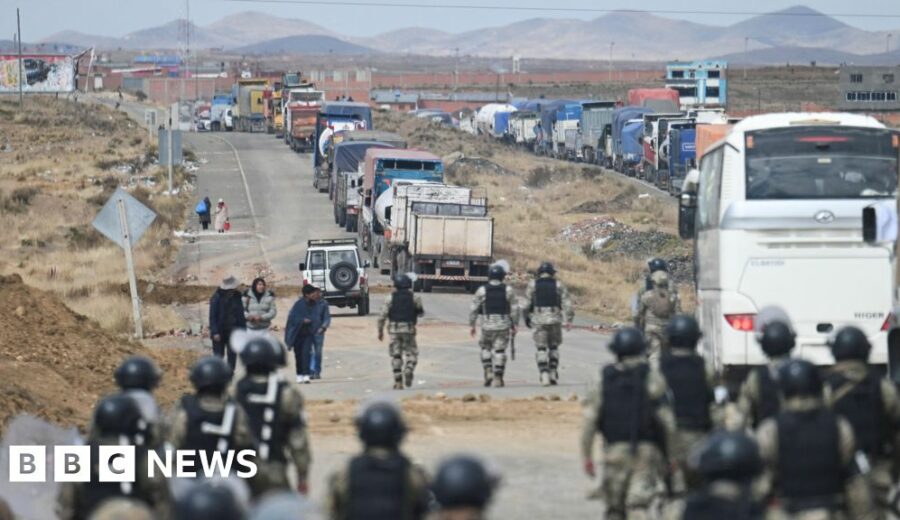
A convoy carrying Bolivia’s public works minister, Mauricio Zamora, was ambushed by protesters on Saturday, leaving him briefly missing while overseeing the clearance of roadblocks.
The incident occurred in the town of Copata, south of the capital La Paz, where Zamora’s vehicle was intercepted and separated from the rest of the group. He was later found safe, but the attack highlights the escalating violence in the country.
Bolivian Protests
The protests, led by supporters of former President Evo Morales, have intensified in recent days, with demonstrators clashing with security forces and blocking roads to slow the flow of goods into La Paz and nearby El Alto.
The government, led by center-right President Rodrigo Paz, has deployed police and military to clear the roadblocks, but the efforts have been met with renewed violence, including attacks on convoys with stones and dynamite.
The protests are a response to Paz’s austerity measures, including the scrapping of fuel subsidies, which have raised living costs and angered many Bolivians. Morales, who is facing criminal allegations, has supported the protests and has long opposed US involvement in Latin America.
Government Response
Paz has said he is open to dialogue with the protesters, but warned that “everything has a limit.” The government has accused Morales of instigating the unrest, which has resulted in looting, burning of buildings, and attacks on journalists.
The situation in Bolivia remains volatile, with no clear end in sight to the protests and violence. The country’s economic crisis, which Paz was elected to address, continues to worsen, with the latest developments only adding to the uncertainty.
The ongoing crisis in Bolivia has significant implications for the region, as it raises concerns about the stability of democratic governments and the influence of external factors on domestic politics. As the situation continues to unfold, it is clear that the fate of Bolivia’s government and economy hangs in the balance.


