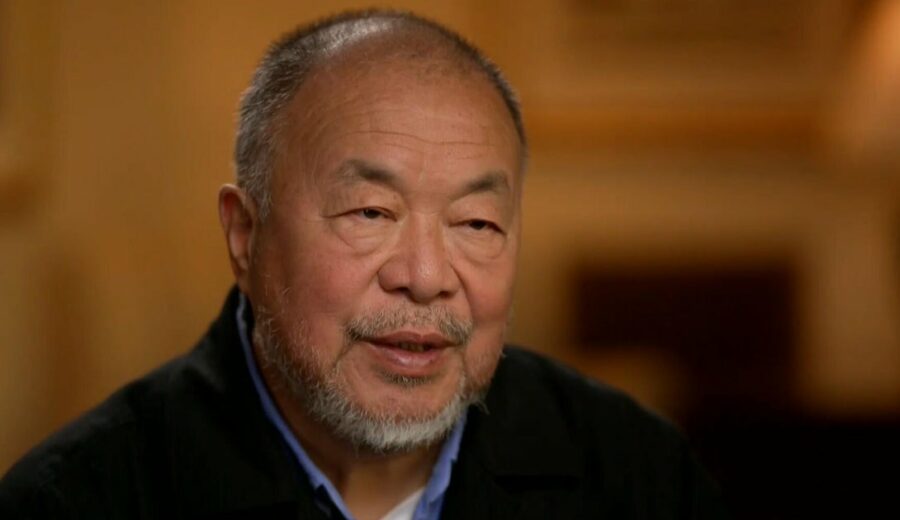
Ai Weiwei, a prominent figure in contemporary art, is sounding the alarm on the growing threat of censorship in the West, warning that it’s becoming increasingly pervasive. The renowned artist, known for his outspoken criticism of authoritarian regimes, says that censorship is not just a problem in countries like China, but also in Western societies. In a recent interview, Ai revealed that he believes the West is no longer defending fundamental human rights, including freedom of speech.
Ai’s own experiences with censorship are well-documented. In 2009, he was detained by police in China’s Sichuan province, and in 2011, he was held in secretive detention for 81 days. After his release, Ai made dioramas of his small cell and the two guards who stood over him 24 hours a day. He also installed webcams in his home and livestreamed his life, only to be ordered by authorities to shut them down.
Censorship in the West
Ai’s warnings about censorship in the West are particularly striking, given his experiences in China. He believes that many people are unaware of the extent to which censorship is occurring, comparing it to a fish living in a tank, unaware of the larger ocean. Ai says that censorship is an “indispensable tool of mental enslavement” and that it operates around the clock in countries like China.
In his new book, “On Censorship,” Ai writes about the sophisticated surveillance techniques used by authorities to monitor and control individuals. He recounts finding listening devices in his studio’s electrical sockets and being detained and interrogated at an airport in China. Ai’s experiences have led him to conclude that censorship is a global problem, not just a concern in authoritarian regimes.
Implications and Reactions
Ai’s warnings about censorship have significant implications for artists, activists, and anyone who values freedom of speech. His experiences serve as a reminder that censorship can take many forms, from overt repression to subtle manipulation. As Ai continues to speak out against censorship, his message is likely to resonate with those who are concerned about the erosion of human rights and democratic values.
The broader significance of Ai’s warnings lies in the fact that censorship is not just a problem for individuals, but also for societies as a whole. When censorship is allowed to flourish, it can undermine the very foundations of democracy, leading to a decline in critical thinking, creativity, and innovation. As Ai’s story makes clear, the fight against censorship is an ongoing struggle that requires constant vigilance and a commitment to defending fundamental human rights.