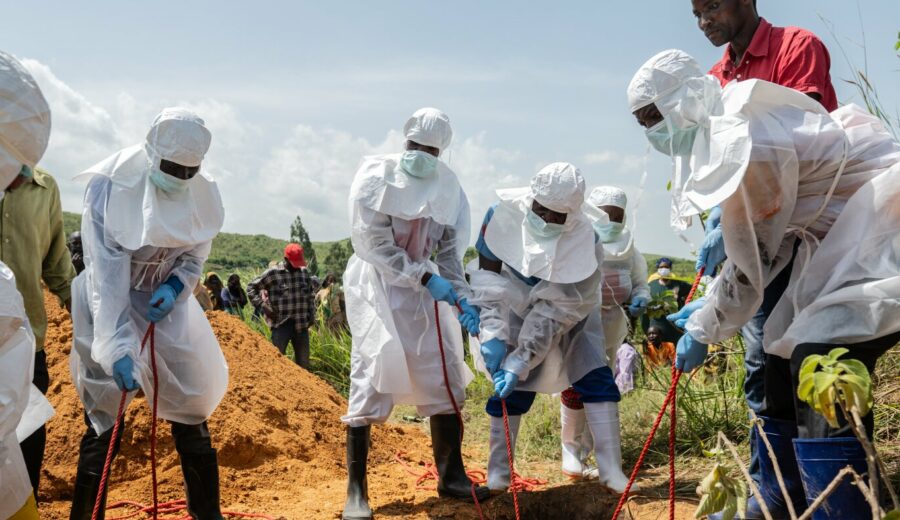
More than 200 people have died and over 800 cases of Ebola have been reported in the Democratic Republic of Congo, where health workers are struggling to contain the outbreak amidst distrust and armed conflict.
The Congolese government has registered 867 suspected cases of Ebola and 204 deaths, with the first case reported on April 24 in the city of Bunia, in Ituri province, in eastern Congo. Neighboring Uganda has also reported five confirmed Ebola cases, raising concerns about the virus spreading across international borders.
Ebola Outbreak Crisis
The World Health Organization has raised its risk level for the disease to “very high,” citing the potential for rapid spread. The outbreak is caused by the less-studied Bundibugyo species of the virus, which has complicated the response efforts.
Health workers face significant challenges, including poor road infrastructure, violent armed groups, and a lack of community trust. The epicenter of the outbreak, Ituri, is plagued by massacres committed by notorious armed groups, making it difficult for health responders to operate.
The living and working conditions in outbreak hotspots such as the towns of Mongbwalu and Rwampara are cramped and unsanitary, with tens of thousands of people surviving by digging for gold with crude tools. Outsiders are rare in these remote areas, and health responders say that community reactions to the outbreak are mixed, with some seeking information on how to protect themselves while others are suspicious and misinformed.
Response and Implications
Aid workers have started setting up Ebola treatment centers in eastern Congo, but U.S. aid cuts are complicating the response. Congo’s Health Minister Roger Kamba has called for increased funding to battle the disease, citing the fact that the virus “knows no borders, it knows no race, it knows no tribe.”
The outbreak has significant implications for global health, and the international community must come together to support the response efforts. The World Health Organization and other aid organizations are working to contain the outbreak, but more needs to be done to address the root causes of the crisis and prevent future outbreaks.