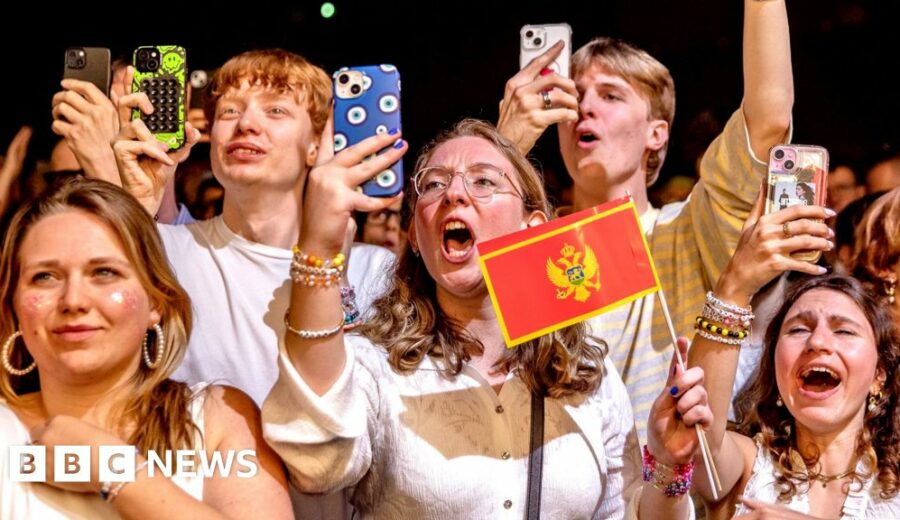
The Eurovision Song Contest’s 70th anniversary has been marred by controversy as five countries, including Spain and Ireland, boycott the event over Israel’s participation. The boycott comes after Israel’s government launched a military offensive in Gaza in 2023, resulting in significant casualties.
The contest, set to take place in Vienna, Austria, has been overshadowed by the row, with many fans left feeling conflicted. Israel’s presence in the contest has sparked protests and controversy in recent years, with some countries claiming that Israel’s government has unfairly influenced the public vote.
Eurovision Song Contest
The Eurovision Song Contest has a long history of promoting unity and peace through music, but the current controversy has left many fans feeling divided. The contest’s fan base is a crucial part of its success, with many fans attending the event and participating in online communities.
Some fan sites have suspended their coverage of the contest in response to the boycott, while others have tried to find a middle ground. Welsh Eurovision fan Philip Dore has suggested that fans could follow the build-up to the contest but drop out when the events move to Vienna.
The controversy has highlighted the complex links between the Eurovision Song Contest and its fan community, with many fans feeling a strong emotional connection to the event. Despite the boycott, tickets for the contest’s nine final events in Vienna have sold out in record time.
Implications and Reactions
The boycott has significant implications for the future of the Eurovision Song Contest, with some countries threatening to withdraw their participation in future events. The controversy has also sparked a wider debate about the role of politics in cultural events.
As the contest approaches, fans are left to navigate the complex and sensitive issues surrounding Israel’s participation. The Eurovision Song Contest’s ability to bring people together through music will be put to the test as the event goes ahead despite the boycott.
The Eurovision Song Contest’s 70th anniversary has been marked by controversy, but the event remains a significant cultural phenomenon, with a dedicated fan base and a wide reach. As the contest continues to evolve, it will be important to balance the need for inclusivity and respect with the need for free expression and cultural exchange.


