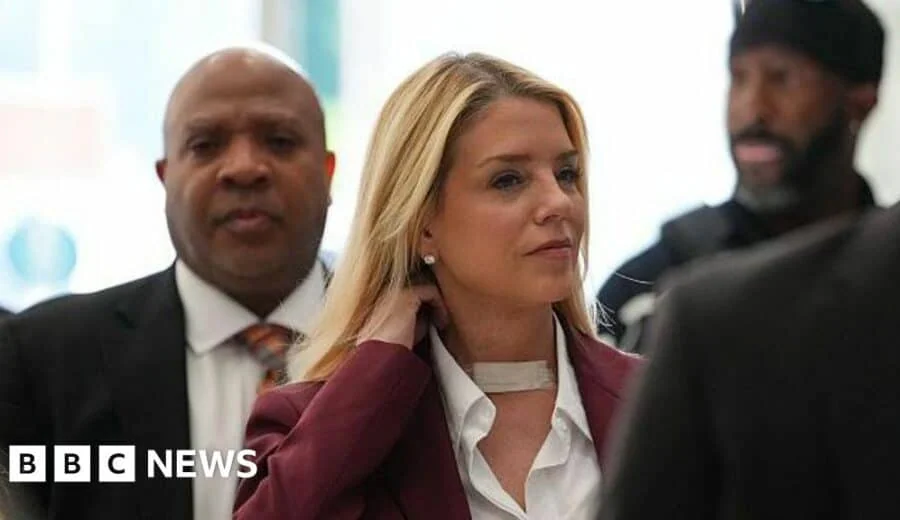
Former US Attorney General Pam Bondi faced intense questioning from lawmakers on Friday over her handling of documents related to convicted sex offender Jeffrey Epstein. Bondi testified behind closed doors in Washington DC, defending her actions as “an unprecedented commitment to transparency” and producing nearly three million pages of material.
Bondi was summoned by the US House Oversight Committee to explain her role in implementing the Epstein Files Transparency Act, which mandated the public release of unclassified records. However, critics accuse her of withholding documents and publishing files that made Epstein’s victims publicly identifiable.
Epstein Files Transparency
The committee’s Republican chairman, James Comer, is investigating the “possible mismanagement” of the Epstein investigation and compliance with the act. Comer wants all relevant documents released, saying successive governments have failed Epstein’s victims. Democrats on the committee accused Bondi of being evasive in her answers and deferring responsibility to her former deputy.
Maria Farmer, an Epstein survivor, criticized Bondi’s appearance, saying she “ignored and disregarded the will of Epstein survivors who have waited for justice for decades.” Bondi denied accusations that she shifted blame to her former deputy, Todd Blanche, now the acting attorney general.
Investigation and Implications
The Trump administration has faced bipartisan pressure to release all documents related to the Epstein investigation. The handling of the files has been widely criticized, including the failure to redact the names of Epstein’s victims. Bondi’s testimony is part of a broader investigation into the government’s response to the Epstein case.
The case has significant implications for the government’s handling of sensitive information and its commitment to transparency. As the investigation continues, lawmakers and advocates will be watching closely to see if justice is served for Epstein’s victims.