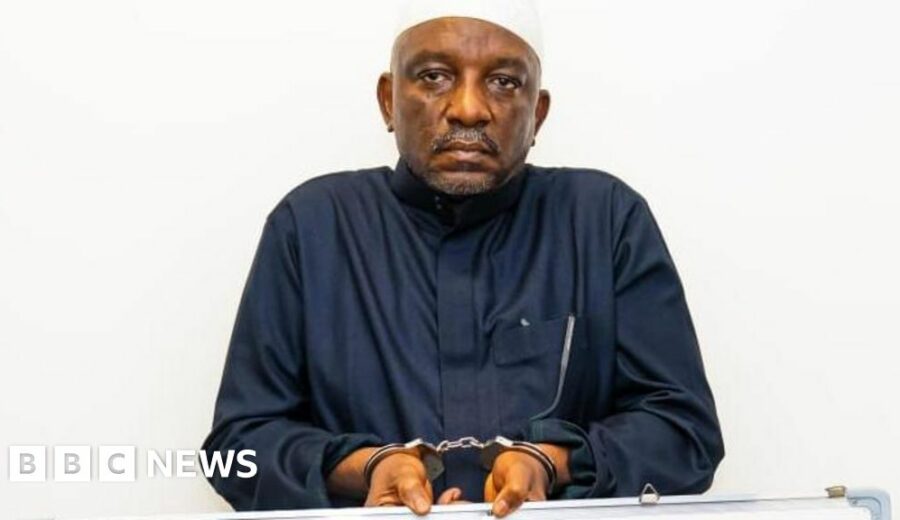
Nigeria’s anti-corruption agency has arrested former Power Minister Saleh Mamman, just a week after he was sentenced to 75 years in prison for corruption charges. Mamman was taken into custody in the northern Kaduna state after authorities tracked him down following weeks of surveillance. The arrest marks a significant milestone in the country’s fight against high-level corruption.
Mamman was found guilty on 12 counts related to the diversion of funds meant for two hydroelectric power projects, with the court ruling that prosecutors had proven their case beyond reasonable doubt. The former minister was sentenced in absentia after failing to appear in court, and his arrest on Tuesday is a rare follow-through in the fight against corruption. The Economic and Financial Crimes Commission (EFCC) said Mamman had gone into hiding after being convicted by a court in the capital Abuja earlier this month.
Nigerian Corruption Crackdown
The EFCC chairman, Ola Olukoyede, stated that authorities are determined to ensure the former minister serves his sentence, emphasizing the importance of holding corrupt officials accountable. The judge who ruled on Mamman’s case noted that the EFCC had shown that the former minister and his associates diverted at least $14 million intended for critical electricity projects, describing the diversion of public funds as a gross abuse of public trust.
Mamman served as Nigeria’s power minister between 2019 and 2021 under former President Muhammadu Buhari, and his conviction has sparked outrage over the country’s lingering electricity problems. Despite being one of Africa’s biggest energy producers, Nigeria still faces frequent blackouts and power cuts, affecting homes and businesses. Many people rely on fuel generators for electricity, but rising fuel costs have made this increasingly difficult.
Implications and Reactions
The arrest of Mamman has significant implications for Nigeria’s anti-corruption efforts, as it demonstrates the government’s commitment to holding high-ranking officials accountable for their actions. The conviction has also sparked calls for greater transparency and accountability in the country’s energy sector. As Nigeria continues to grapple with its electricity challenges, the arrest of Mamman serves as a reminder of the need for effective governance and leadership.
The case against Mamman is not the only corruption trial he faces, as he is also accused of fraud involving $20 million in a separate case. The outcome of these cases will be closely watched, as they have the potential to set a precedent for future corruption cases in Nigeria. As the country moves forward, it is clear that addressing corruption and improving governance will be essential to unlocking Nigeria’s full potential.