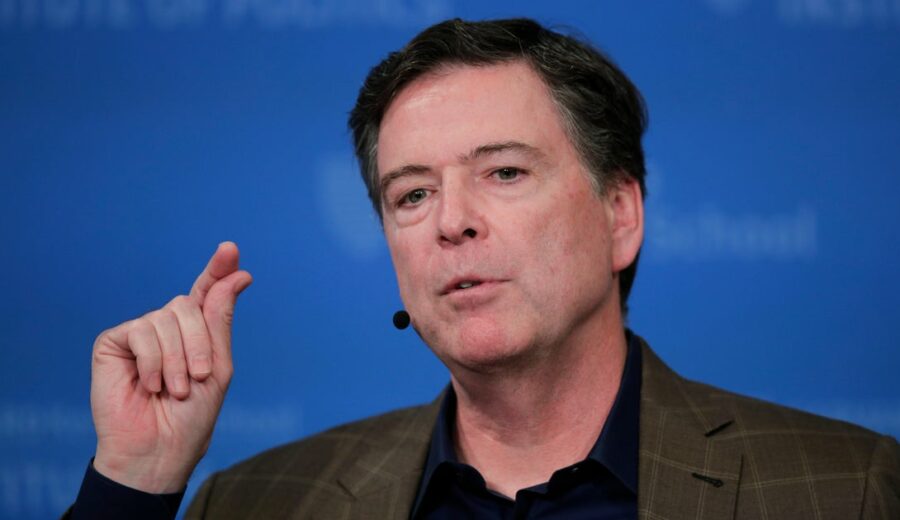
The lead prosecutor in the case against former FBI Director James Comey has withdrawn from the case, according to court papers filed on Friday. Assistant U.S. Attorney Matthew Petracca, who signed the indictment accusing Comey of threatening President Trump, is no longer on the case. This development comes as Comey’s legal team prepares to seek dismissal of the case, citing selective and vindictive prosecution.
The case, which is scheduled to go to trial in October in North Carolina, centers around a 2025 Instagram post by Comey featuring seashells arranged as “86 47”. The prosecution argues that the post implied a threat to the President’s life, while Comey claims it was a harmless photo. The former FBI director has denied all wrongdoing and vowed to fight the charges in court.
Comey Case Controversy
The indictment has drawn criticism from many legal experts, who argue that the bar for proving a statement is a threat is extremely high. They view the charges as an attempt to punish Comey for his political opinions, rather than a genuine threat to the President. Comey has been an outspoken critic of Trump since his firing as FBI director in 2017.
The case has also sparked concerns about the limits of free speech and the potential for political motivated prosecutions. If the charges against Comey are successful, it could set a precedent for criminalizing ambiguous messages, potentially threatening the First Amendment. Pace University professor and former prosecutor Perry Carbone noted that “if you can charge somebody for arranging seashells in the sand with an ambiguous message, then the First Amendment is in serious jeopardy”.
Implications and Next Steps
The withdrawal of the lead prosecutor from the case may indicate a shift in the prosecution’s strategy or a response to criticism of the indictment. The case will now be handled by federal prosecutor Timothy Severo. Attorney General Todd Blanche has denied that the case was politically motivated, stating that it was spearheaded by “local prosecutors” and “local agents”.
The outcome of the case will have significant implications for the limits of free speech and the relationship between the government and its critics. As the case moves forward, it will be closely watched by legal experts, politicians, and the public, with many seeing it as a test of the First Amendment and the independence of the justice system.