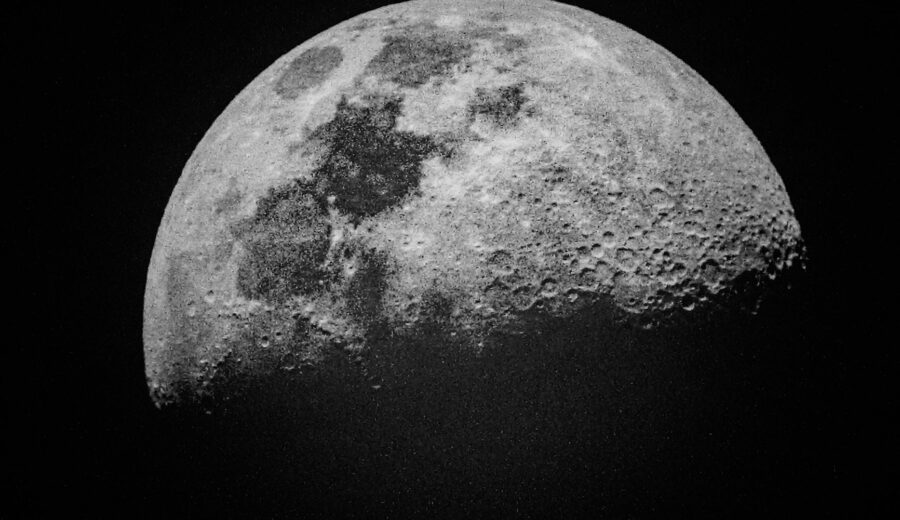
A stray SpaceX rocket has crashed into the Moon, creating a new crater near the Einstein crater and providing scientists with a unique research opportunity to study the impact and its effects on the lunar surface.
The empty upper stage of a Falcon 9 rocket, which was launched from Florida in January last year, struck the Moon at a speed of approximately 5,400 miles per hour, creating a brief, intense flash that was difficult to detect, even with high-powered telescopes.
SpaceX Rocket Impact
The impact occurred on Wednesday, and while it was not directly observable due to the bright daylight conditions on the Moon’s surface, scientists are eagerly awaiting images from NASA’s Lunar Reconnaissance Orbiter, which will pass over the crash site in the coming days, allowing for a comparison of before-and-after images.
The rocket’s size, speed, and point of impact are all known, making this collision a rare, controlled experiment that will help scientists test their models of how impacts create craters, throw debris, and send tremors through the Moon’s interior.
Understanding the effects of this impact will also provide valuable insights for engineers designing safer landers and future Moon bases, as well as shedding light on the Moon’s geology and the formation of the Earth-Moon system approximately 4.5 billion years ago.
Implications and Future Research
The accidental collision is not the first time a human-made object has struck the Moon, with dozens of spacecraft having crashed into the lunar surface since 1959, including the Soviet probe Luna 2 and NASA’s Ranger probes.
As scientists continue to analyze the data from this impact, they will gain a better understanding of the Moon’s composition and the effects of impacts on its surface, ultimately contributing to a safer and more successful return to the Moon in the future.
The study of this impact and its effects will have significant implications for the future of space exploration, as scientists and engineers work to design and implement more effective and sustainable missions to the Moon and beyond, and the data gathered from this event will be a crucial step in that process.