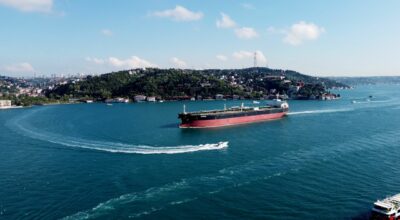
President Donald Trump has paused the US military operation to escort merchant ships through the Strait of Hormuz, just 50 hours after announcing the plan. The decision to halt “Project Freedom” came on the same day that US Defense Secretary Pete Hegseth declared the US was “leading with strength, clarity and purpose” in the region. This unexpected move has raised questions about the future of the operation.
The plan, announced on Sunday, aimed to guide stranded ships through the crucial waterway, which has been effectively closed by Iran. The US had assembled a significant military presence, including guided-missile destroyers, aircraft, and 15,000 service personnel, to support the operation. Despite initial progress, with two US-flagged merchant vessels successfully transiting the strait, the operation has been put on hold.
Strait of Hormuz Shipping
The Strait of Hormuz is a vital waterway, with around 20% of the world’s oil and gas flowing through it. Iran’s threats to ships using the strait have led to increased oil prices and concerns about the global economy. The US had positioned itself as a leader in ensuring the safe passage of ships through the region. However, the pause in “Project Freedom” has created uncertainty about the future of shipping in the area.
The US military had reported some success in the initial stages of the operation, with two US-flagged vessels safely transiting the strait. However, the operation was not without incident, with reports of explosions and fires on ships in the region. The pause in the operation has raised questions about the US’s strategy in the region and its ability to negotiate with Iran.
According to the Baltic and International Maritime Council, around 1,000 vessels with 20,000 seafarers on board are currently stranded in the region. The pause in “Project Freedom” has significant implications for these ships and their crews, as well as the global economy.
Reactions and Implications
The decision to pause “Project Freedom” has been met with surprise and concern from observers. The US had presented the operation as a humanitarian gesture, aimed at ensuring the safe passage of ships through the region. The pause in the operation has raised questions about the US’s commitment to this goal and its ability to negotiate with Iran.
The implications of the pause in “Project Freedom” are significant, with potential consequences for the global economy and the safety of ships in the region. As the situation continues to unfold, it remains to be seen how the US will proceed and what the outcome will be for the stranded ships and their crews.
The pause in “Project Freedom” is a significant development in the ongoing tensions between the US and Iran, and its impact will be felt far beyond the Strait of Hormuz. The situation highlights the complex and volatile nature of international relations in the region, and the need for careful diplomacy and strategic decision-making.