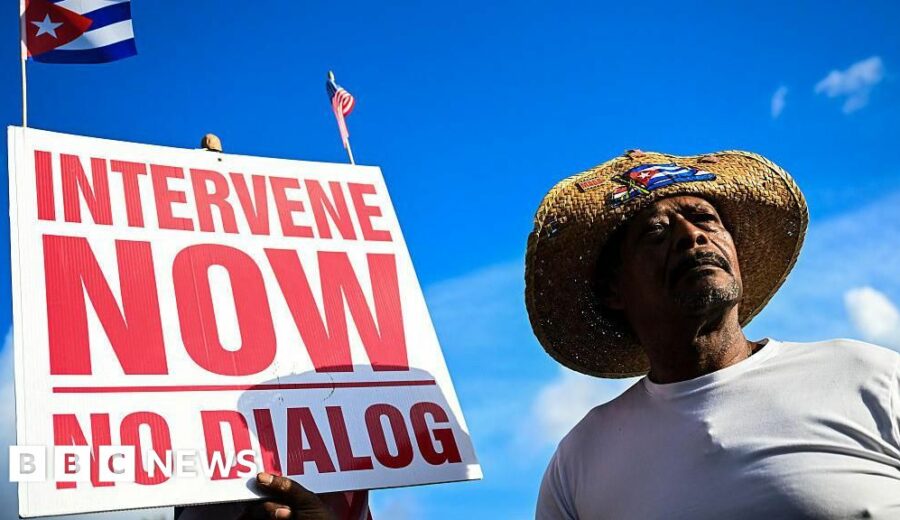
The US has charged Cuba’s former president, Raúl Castro, with murder, sparking speculation about potential military intervention in the island nation. The indictment stems from the 1996 shootdown of two civilian aircraft by Cuban fighter jets. This move has raised questions about the US’s next steps, with some lawmakers calling for a mission to capture Castro.
The charge against the 94-year-old former leader has led to increased tensions between the US and Cuba, with the White House vowing not to tolerate a “rogue state” 90 miles from US shores. The US has been engaged in a maximum pressure campaign against Cuba, leading to significant fuel and energy shortages. President Donald Trump has said he believes no “escalation” will be necessary, but the situation remains uncertain.
Cuba Crisis Escalation
Experts say that a military operation to capture Castro is feasible but would be fraught with risks and complications. The US has a history of intervening in Latin American countries, including the 1989 invasion of Panama to topple Manuel Noriega. However, removing Castro may not have a significant impact on the wider Cuban government, where he is now seen as an influential figurehead.
The US has also floated the possibility of new leadership taking over in Havana, with Trump saying he is already dealing with figures inside Cuba who hope for US help. The US is seeking changes, including a pledge to open up the economy and end the presence of Russian or Chinese intelligence agencies on the island. These changes could leave Cuba’s government largely intact, avoiding instability in the region.
Implications and Next Steps
The situation in Cuba has significant implications for the US and the region. The US is seeking to promote democracy and stability in the hemisphere, while also protecting its national security interests. The challenge for the US is to balance its goals with the need to avoid instability and promote a peaceful resolution to the crisis.
The US’s actions in Cuba are being closely watched by other countries in the region, and the outcome will have broader significance for US relations with Latin America. As the situation continues to unfold, the US will need to carefully consider its next steps to achieve its goals while promoting stability and security in the region.