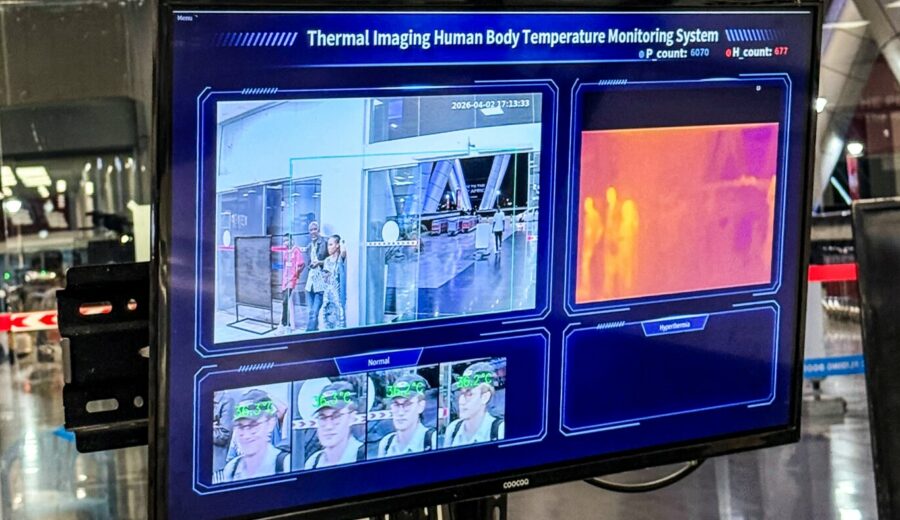
US passengers flying from Ebola-affected countries are being rerouted to select airports in the US, with all Americans who have passed through Uganda, South Sudan, or the Democratic Republic of Congo in the past 21 days required to fly into Washington Dulles International Airport.
The new policy, announced on May 21, affects travelers like Michal Ruprecht, a medical student and freelance reporter who was returning home to Michigan after a month-long reporting trip to Uganda. Ruprecht was one of the first passengers to fly under the new policy, and he was flagged for extra screening at Dulles airport.
Enhanced Ebola Screening
The US Centers for Disease Control and Prevention (CDC) are conducting enhanced screenings at the designated airports, which include Washington Dulles, Hartsfield-Jackson Atlanta International Airport, and George Bush Intercontinental Airport in Houston. The screenings involve temperature checks and questions about symptoms and exposure to Ebola.
The CDC is working with state health departments to monitor passengers who have traveled to Ebola-affected areas, with some passengers being monitored daily and others being contacted less frequently, depending on their exposure risk. The effort is part of a broader response to the growing Ebola outbreak in the Democratic Republic of Congo, Uganda, and South Sudan, which has already resulted in over 800 suspected cases and more than 180 suspected deaths.
The US response to the outbreak has been led by the CDC, with support from other federal agencies and state health departments. The effort involves a range of activities, including travel restrictions, enhanced screenings, and monitoring of passengers who have traveled to affected areas.
Public Health Response
The public health response to the Ebola outbreak is a complex and challenging effort, with multiple agencies and organizations working together to prevent the spread of the disease. The response involves not only the CDC and state health departments but also other federal agencies, such as US Customs and Border Protection, and international organizations, such as the World Health Organization.
The Ebola outbreak is a reminder of the importance of a strong public health system, and the need for continued investment in public health infrastructure and preparedness. As Dr. Jeanne Marrazzo, a former top official at the National Institutes of Health, notes, the US public health system is not at its peak, and the Ebola outbreak is just one of many health issues that the system is currently dealing with.
The Ebola outbreak has significant implications for public health and global health security, and the US response to the outbreak is an important part of a broader effort to prevent the spread of the disease and protect public health. The outbreak is a reminder of the need for continued vigilance and preparedness, and the importance of a strong public health system in preventing and responding to public health emergencies.


