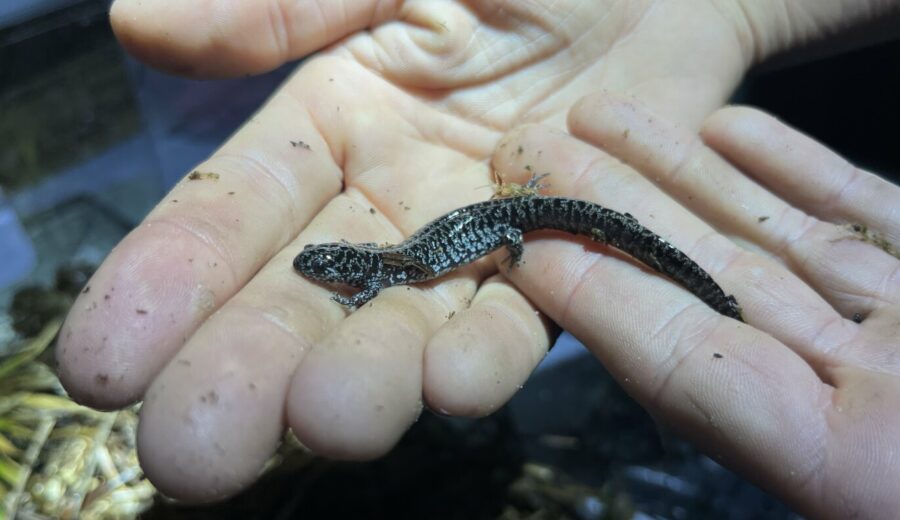
One of America’s most imperiled salamanders is on the verge of extinction, with conservation efforts underway to save the frosted flatwoods salamander. The species, found in the southeastern United States, is threatened by declining population trends and habitat loss.
Nicole Dahrouge, a conservationist with the Amphibian and Reptile Conservancy, is working to collect and raise the salamanders’ eggs in captivity, a crucial step in boosting their population. The eggs are laid in ephemeral ponds and require a specific set of climatic conditions to hatch, making it a delicate and challenging process.
Frosted Flatwoods Salamander Conservation
The frosted flatwoods salamander is one of the most imperiled amphibians in North America, with a population that is teetering on the brink of an “extinction vortex.” The species was listed as threatened under the Endangered Species Act in 1999, but conservationists argue that it should be uplisted to endangered due to declining population trends.
The U.S. Fish and Wildlife Service has not taken action to reclassify the species, despite a status review in 2019 that found it warranted endangered status. Conservationists like Dahrouge and JJ Apodaca, executive director of the Amphibian and Reptile Conservancy, are working to raise awareness and support for the species’ conservation.
The conservation effort is a monumental task, with a low survival rate for eggs and larvae in the wild. Dahrouge’s work is a “stop-gap” measure, with no end in sight, and highlights the difficulty of recovering a federally threatened or endangered species when it is already on the brink.
Implications And Next Steps
The fate of the frosted flatwoods salamander has significant implications for conservation efforts in the United States. The species’ decline is a symptom of broader environmental issues, including habitat loss and climate change. Conservationists argue that the species’ plight highlights the need for more effective conservation measures and increased protection for threatened and endangered species.
The conservation of the frosted flatwoods salamander is a complex and ongoing process, with no easy solutions. However, the work of conservationists like Dahrouge and Apodaca offers a glimmer of hope for the species’ survival, and serves as a reminder of the importance of protecting America’s imperiled wildlife.
The decline of the frosted flatwoods salamander is a stark reminder of the broader significance of conservation efforts, and the need to protect America’s imperiled species before it’s too late.


