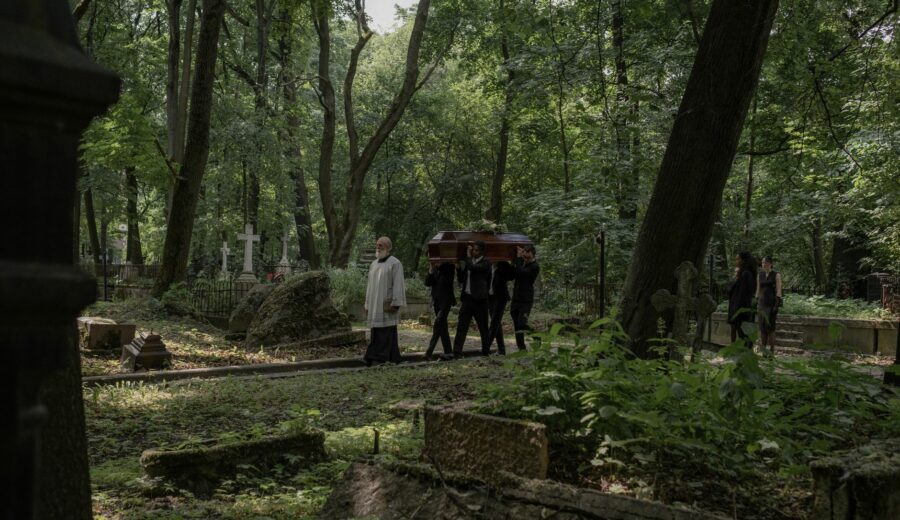
Iran has begun a dayslong funeral for its slain Supreme Leader, Ayatollah Ali Khamenei, with huge crowds gathering in Tehran to pay their respects. The funeral ceremonies, which started on Saturday, come four months after Khamenei was killed in U.S.-Israeli airstrikes. Thousands of mourners, including men and women in black, wept openly and beat their chests in unison, a traditional Shia mourning ritual.
The funeral is being held at the Imam Khomeini Mosalla Grand Mosque in Tehran, where Khamenei’s casket, along with those of four family members, is on display. The ceremony has drawn official foreign delegations, including representatives from Russia, Pakistan, and Iraq, as well as a delegation from Saudi Arabia, a longtime rival of Iran. Iranian President Masoud Pezeshkian and Speaker of Parliament Mohammad Bagher Ghalibaf were also in attendance.
Ayatollah Khamenei Funeral
Khamenei’s death has had significant implications for Iran, which has been embroiled in a war with the U.S. and Israel since February. The Iranian regime is using the funeral as an opportunity to show stability and power, with officials expecting millions of people to attend the ceremonies. The funeral procession will take Khamenei’s body to several cities in Iran and Iraq, including the holy cities of Najaf and Karbala, before he is buried in his birthplace of Mashhad on Thursday.
Khamenei was a divisive figure in Iran, with many criticizing his role in the country’s human rights abuses, including the killing of at least 7,000 people during nationwide antigovernment protests in 2025. For some Iranians, the funeral has brought little comfort, with one woman telling NPR that Khamenei’s death still causes her torment. Others, however, see the funeral as an opportunity to pay their respects to a leader who was a significant figure in Iranian politics for over three decades.
Implications and Reactions
The funeral has also drawn attention to the ongoing conflict between Iran and the U.S. and Israel, with chants of “Death to America” and displays of anti-American sentiment. The ceremony has been seen as a show of strength by the Iranian regime, which has been seeking to demonstrate its resilience in the face of international pressure. As the funeral comes to a close, attention will turn to the future of Iran and the region, with many wondering what the implications of Khamenei’s death will be for the country and its relationships with other nations.
The funeral of Ayatollah Khamenei marks a significant moment in Iranian history, with the country at a crossroads in its relations with the rest of the world. As Iran looks to the future, the legacy of Khamenei and the impact of his death will continue to shape the country’s trajectory, with broader significance for the region and the world.