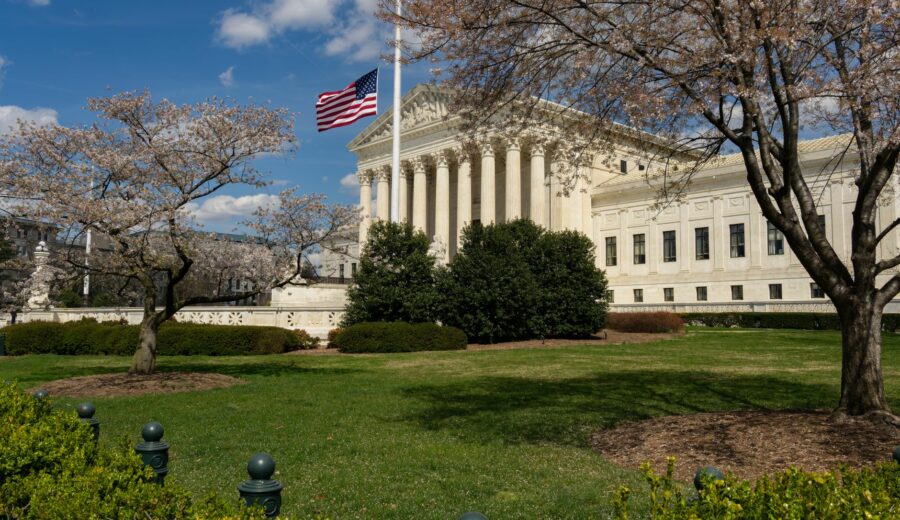
The Supreme Court has restricted the use of geofence warrants, a law enforcement technique that allows police to access tech company databases to identify individuals near a crime scene.
In a 6-3 decision, Justice Elena Kagan wrote that geofencing violates the Fourth Amendment’s prohibition against unreasonable searches, as it enables the government to search millions of users’ location histories without suspicion.
Geofence Warrants Explained
A geofence warrant involves drawing a virtual fence around a crime scene and requiring a tech company to search its data for users within that area at the time of the crime. This technique was used in a Virginia bank robbery case, where detectives obtained a warrant to access Google’s location data, leading to the identification and conviction of the perpetrator, Okello Chatrie.
The case highlighted concerns about the potential for mass surveillance and the erosion of individual privacy. Chatrie’s attorneys argued that geofence searches allow the government to “search first and develop suspicions later,” while the government claimed that users can choose not to share their location data with companies like Google.
Implications and Reactions
The Supreme Court’s decision is expected to have significant implications for law enforcement agencies, which have increasingly relied on geofence warrants to investigate crimes. The ruling may lead to a re-evaluation of the use of this technique and the development of new methods that balance public safety with individual privacy rights.
The decision has been welcomed by civil liberties groups, who argue that it protects Americans from unwarranted surveillance and upholds the principles of the Fourth Amendment. As the use of technology continues to evolve, the Supreme Court’s ruling serves as a reminder of the importance of safeguarding individual rights in the digital age.